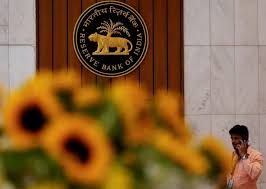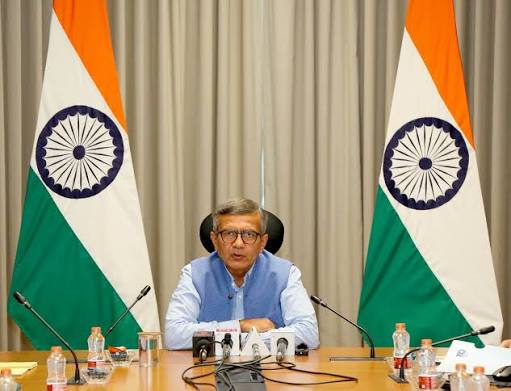

The Reserve Bank of India (RBI) has officially released its highly anticipated balance of payments data for the final quarter of the 2025–26 fiscal year, revealing that India successfully recorded a robust current account surplus of $7.1 billion, equivalent to roughly 0.7% of the nation’s total Gross Domestic Product (GDP). This critical financial milestone was primarily propelled by a massive, unprecedented surge in structural services exports—specifically across the domestic software development, business processing, and global capability center (GCC) sectors—which effectively counterbalanced a heavily widening merchandise trade deficit driven by a sudden, aggressive spike in international gold imports during the early months of the year. While the surplus marks an impressive testament to India’s macroeconomic resilience, financial analysts observe that the final figure has technically narrowed when compared to the massive $13.7 billion surplus recorded during the exact same period in the previous fiscal year, highlighting the deep, visible impact of a prolonged, structural slowdown in global consumer demand. The economic announcement comes at an incredibly volatile juncture for Dalal Street, where the benchmark BSE Sensex and NSE Nifty50 indices have been violently swinging after crashing to distinct two-month lows, a heavy financial correction triggered by mounting investor anxieties over escalating geopolitical hostilities in West Asia that have aggressively pushed international Brent crude oil prices dangerously close to the psychological threshold of $100 per barrel. Chief Economic Adviser V. Anantha Nageswaran publically addressed these market vulnerabilities, clarifying that while India’s underlying domestic growth engines remain remarkably healthy and strongly insulated, the continuous, unpredictable flare-ups in energy costs represent an immediate, high-priority inflation risk that could severely complicate future monetary policy moves. Adding to the immediate market friction, aggressive and sustained capital outflows by Foreign Portfolio Investors (FPIs)—who dumped a staggering Rs 5,555 crore worth of domestic equities in a single frantic session—continue to apply intense downward pressure on large-cap valuations, forcing Domestic Institutional Investors (DIIs) to step in as aggressive counter-buyers with over Rs 5,165 crore in absorption liquidity to stabilize the panic. Looking ahead into the upcoming quarter, corporate India and macroeconomic strategists are shifting their complete analytical focus toward tracking the initial progression of the southwest monsoon across rural belts and parsing the subtle policy commentary from RBI Governor Sanjay Malhotra following the conclusion of the monetary committee meeting, as these two critical variables will ultimately dictate the long-term path of rural consumer demand, corporate earnings recovery, and any potential timeline for interest rate cuts.
Macro-Economy: Reserve Bank Reports $7.1 Billion Q4 Current Account Surplus Amid Severe Global Headwinds