





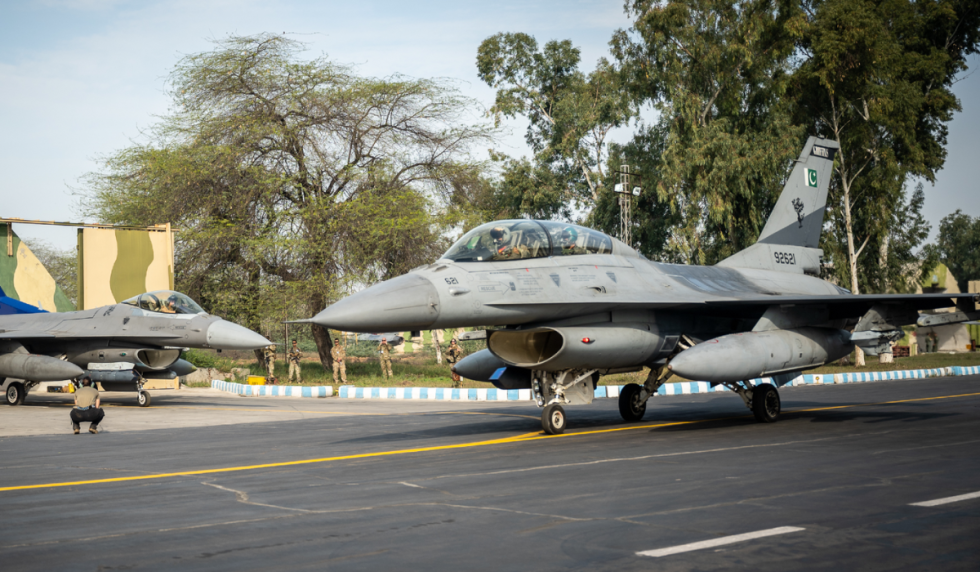
The United States has officially cleared a major $686 million upgrade package for Pakistan’s F-16 fighter jets, a move that comes at a sensitive moment for South Asia. The decision follows rising tensions between Pakistan and India, especially after their brief conflict earlier this year. The upgrade also arrives as Washington increases pressure on New Delhi to expand its defence purchases from the US.
This explainer breaks down what the new deal includes, why it matters, and how it impacts regional dynamics.
What Has the US Approved for Pakistan?
According to a report sent to the US Congress on December 4, Washington has authorised a large package of advanced technology, maintenance support, and major defence equipment (MDE) for Pakistan’s existing F-16 fleet.
Key Elements of the Package
-
Hardware and software upgrades for improved flight and electronic systems
-
Advanced Identification Friend or Foe (IFF) technology for secure aircraft identification
-
Navigation system enhancements
-
Spare parts and repair support
-
92 Link-16 tactical data link systems
-
Six Mk-82 inert bomb bodies for training and testing
Pakistan’s F-16 Inventory
Pakistan currently operates 70–80 F-16 jets, including:
-
Upgraded Block 15 models
-
Former Jordanian F-16s
-
Newer Block 52+ models
Security analysts say this package is part of a long-term plan first initiated in 2022 to ensure Pakistan’s F-16 fleet remains combat-ready for joint counterterrorism operations.
What Are F-16 Fighter Jets?
The F-16 Fighting Falcon, also known as the Viper, is one of the world’s most widely used multi-role combat aircraft. Built by Lockheed Martin, the jet is known for its:
-
High agility
-
Combat versatility
-
Strong performance in air-to-air and air-to-ground missions
F-16s are used by 29 countries, including Pakistan, Türkiye, Israel, Egypt, Greece, Taiwan, Chile, Belgium, Denmark, and the Netherlands.
How F-16s Were Used in the May India–Pakistan Conflict
Tensions spiked after a deadly attack in Pahalgam, Indian-administered Kashmir, on April 22, when 26 people were killed. India blamed the attack on the TRF, a group it says is linked to Lashkar-e-Taiba, an allegation Pakistan denies.
Escalation Timeline
-
May 7: India carried out missile strikes on nine sites in Pakistan and Pakistan-administered Kashmir.
-
Pakistan claimed dozens of civilians were killed.
-
Both countries launched drones and missiles over the next three days, targeting military bases.
-
Pakistan deployed 42 advanced aircraft, including F-16s, JF-17s, and J-10s.
-
A US-brokered ceasefire was reached on May 10, with former President Donald Trump taking credit.
Is the US Using This Deal to Pressure India?
Yes—partially.
The timing aligns with Washington’s efforts to push India to increase its purchase of US-made weapons. Recent friction between the US and India includes:
Rising US–India Tensions
-
India paused several planned US defence purchases in August.
-
A visit by Indian Defence Minister Rajnath Singh to Washington was cancelled.
-
Trump imposed a new 25% tariff on Indian imports for continuing to buy cheap Russian oil, effectively raising total tariffs to 50% on several goods.
Despite pressure, India remains the second-largest buyer of Russian crude, after China.
Why the Deal Upsets India
New Delhi traditionally opposes US support for Pakistan’s F-16 program, arguing that the jets are used against India. However, the US clarified that the upgrade “will not alter the military balance in the region.”
US experts say the deal stands on its own and is part of a long-term maintenance program—not strictly a tool to pressure India.
How Much Does This Deal Strengthen Pakistan?
Analysts say the nearly $700 million package is one of the largest US defence approvals for Pakistan in recent years.
Why It Matters
-
Keeps Pakistan’s F-16 fleet operational until 2040
-
Reinforces US–Pakistan counterterrorism cooperation
-
Reflects Washington’s intention to maintain strategic ties with Islamabad
However, the US is no longer Pakistan’s main defence supplier.
China Is Still Pakistan’s Primary Defence Partner
-
Over 80% of Pakistan’s weapons imports since 2020 have come from China, according to SIPRI.
-
Pakistan heavily used Chinese J-10 fighter jets during the May conflict.
Pakistan continues to balance its defence relations between China and the United States, gaining benefits from both.
Conclusion: A Strategic Move With Regional Impact
The US decision to approve a $686 million F-16 upgrade for Pakistan is a major geopolitical development. While it enhances Pakistan’s air capabilities and strengthens counterterrorism cooperation, it also adds pressure to already tense US-India relations.
With Pakistan maintaining strong defence ties with both China and the US, the upgrade highlights Islamabad’s strategic balancing act — and its importance in regional security dynamics.